
German Christmas Recipes: 3 Classics & 7 Baking Secrets

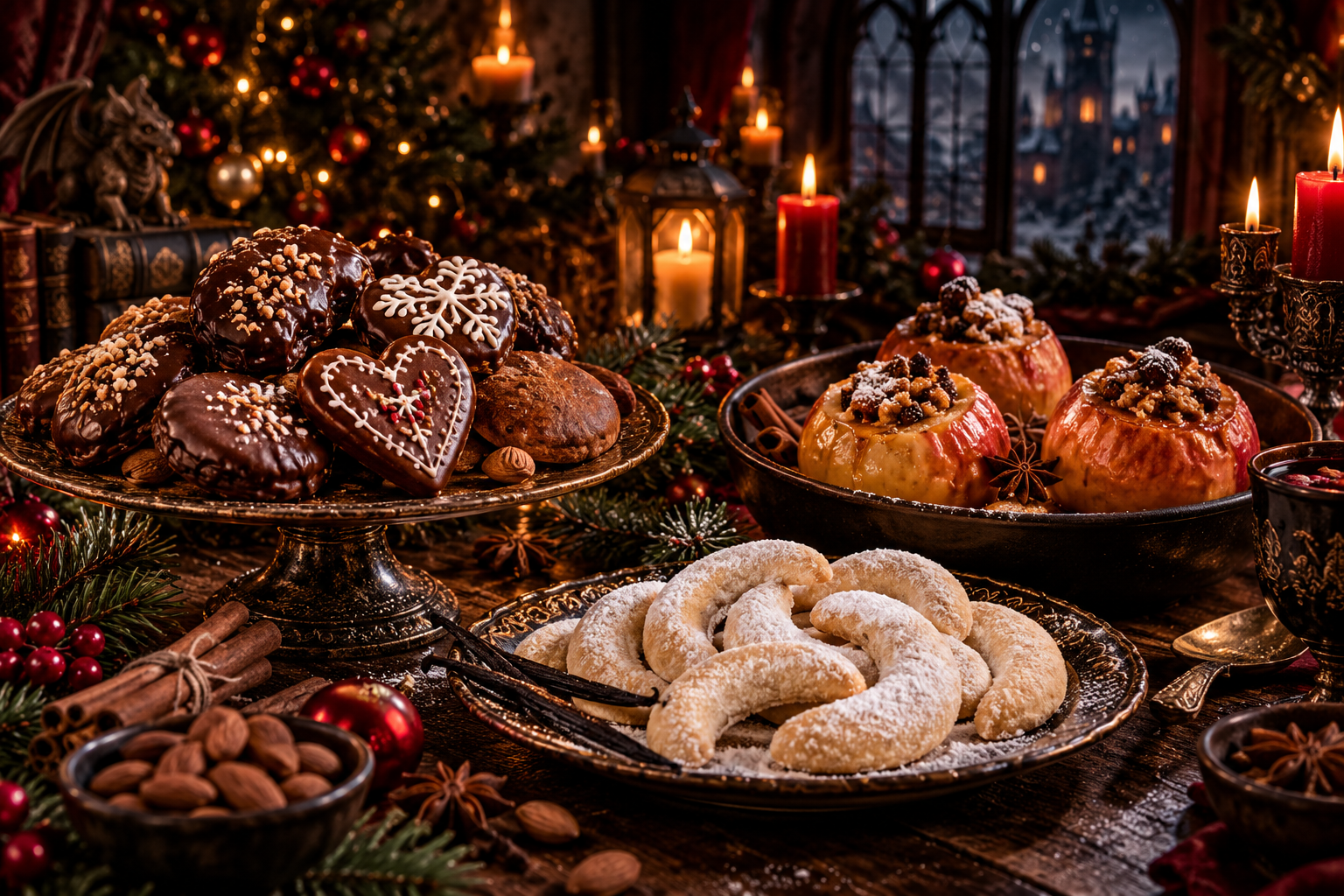
German Christmas Recipes: 3 Traditional Favorites & 7 Baking Secrets
From the famous Christmas markets of Germany to the candlelit kitchen of Dracula’s castle, discover the flavors that make the holiday season unforgettable.
Imagine walking through a German Christmas market on a cold December evening.
The streets glow with golden lights. Wooden stalls are decorated with evergreen branches. Somewhere nearby, the irresistible aroma of cinnamon, roasted almonds, warm gingerbread, and vanilla fills the winter air.
This is the magic of Christmas in Germany.
And the best part? You don’t need to travel to Berlin, Dresden, or Nuremberg to experience some of these wonderful flavors.
At Dracula’s Kitchen, we’re bringing three beloved German Christmas treats into our gothic castle kitchen.
Today you’ll discover:
- Traditional German-style Lebkuchen
- Buttery Vanillekipferl cookies
- Warm Bratäpfel with marzipan
- Seven practical baking secrets for better holiday results
Light the candles, prepare your ingredients, and let the Christmas magic begin.
1. Lebkuchen: Germany’s Famous Christmas Gingerbread
Soft, aromatic, and filled with warming Christmas spices.
Lebkuchen is one of Germany’s most recognizable Christmas treats.
The city of Nuremberg is particularly famous for its gingerbread tradition. Authentic Nürnberger Lebkuchen is a protected regional specialty, celebrated for its distinctive combination of nuts, spices, and sweetness.
Our version is a simple, homemade German-style gingerbread inspired by those festive flavors.
Recipe Details
- Preparation: 20 minutes
- Chilling: 30 minutes
- Baking: 10–12 minutes
- Yield: Approximately 16 cookies
- Oven: 350°F (175°C)
Ingredients
- 1½ cups (190 g) all-purpose flour
- 1 cup (100 g) finely ground almonds
- ⅓ cup (110 g) honey
- ⅓ cup (65 g) brown sugar
- 3 tablespoons (45 g) unsalted butter
- 1 large egg
- 1 teaspoon baking powder
- 1½ teaspoons ground cinnamon
- ½ teaspoon ground ginger
- ¼ teaspoon ground cloves
- ¼ teaspoon ground cardamom
- 1 teaspoon finely grated orange zest
- A pinch of salt
For the optional glaze:
- ⅔ cup (80 g) powdered sugar
- 1–2 tablespoons lemon juice
How to Make German Christmas Lebkuchen
Step 1: Prepare the honey mixture
In a small saucepan over low heat, gently warm the honey, brown sugar, and butter until the butter melts and the sugar begins to dissolve.
Remove from the heat and allow the mixture to cool until lukewarm.
Step 2: Mix the dry ingredients
In a large bowl, combine the flour, ground almonds, baking powder, cinnamon, ginger, cloves, cardamom, orange zest, and salt.
Step 3: Make the dough
Whisk the egg into the cooled honey mixture.
Gradually add the wet ingredients to the dry ingredients, stirring until a soft, slightly sticky dough forms.
Cover and refrigerate for approximately 30 minutes.
Step 4: Shape the cookies
Preheat your oven to 350°F (175°C).
Line a baking sheet with parchment paper.
Scoop small portions of dough onto the sheet, leaving room between them.
Gently flatten each portion into a thick round.
Step 5: Bake
Bake for approximately 10–12 minutes, until the cookies are set around the edges.
Avoid overbaking. Lebkuchen should retain a tender interior.
Step 6: Prepare the glaze
Mix the powdered sugar with enough lemon juice to create a smooth glaze.
Once the cookies have cooled, brush or drizzle the glaze over the tops.
Allow it to set before serving.
Dracula’s Secret: The Spice Trick
Want a richer Christmas aroma?
Combine your spices before mixing them into the dough.
Gently rub the orange zest into the brown sugar to release some of its fragrant oils.
This simple technique distributes the citrus aroma throughout the mixture.
Extra tip: For a more dramatic gothic presentation, decorate a few cookies with melted dark chocolate instead of lemon glaze.
2. Vanillekipferl: The Famous German Vanilla Crescent Cookies
Delicate, buttery, and covered in fragrant vanilla sugar.
Vanillekipferl are traditional crescent-shaped cookies with deep roots in Central European baking.
They’re especially popular during Advent in Germany and Austria.
What makes them so irresistible?
Their delicate shortbread texture, gentle almond flavor, and generous coating of vanilla sugar.
They look elegant, but the ingredients are surprisingly simple.
Recipe Details
- Preparation: 20 minutes
- Chilling: 40 minutes
- Baking: 10–13 minutes
- Yield: Approximately 35 cookies
- Oven: 350°F (175°C)
Ingredients
For the cookies:
- 2 cups (250 g) all-purpose flour
- ¾ cup plus 2 tablespoons (200 g) cold unsalted butter
- 1 cup (100 g) finely ground almonds
- ⅔ cup (80 g) powdered sugar
- 1 teaspoon vanilla extract
- A pinch of salt
For coating:
- ½ cup (60 g) powdered sugar
- 1 packet (8 g) vanilla sugar
How to Make Vanillekipferl
Step 1: Prepare the dough
Combine the flour, ground almonds, powdered sugar, and salt in a bowl.
Add the cold butter, cut into small cubes.
Rub the butter into the dry ingredients until the mixture resembles coarse crumbs.
Add the vanilla extract and gently bring the mixture together into a dough.
Step 2: Chill
Wrap the dough and refrigerate for approximately 40 minutes.
Keeping the dough cool helps the cookies maintain their delicate crescent shape.
Step 3: Shape the crescents
Preheat the oven to 350°F (175°C).
Take small pieces of dough and roll them into short ropes.
Gently curve each rope into a crescent, tapering the ends slightly.
Place them on a parchment-lined baking sheet.
Step 4: Bake
Bake for approximately 10–13 minutes.
The cookies should remain fairly pale, with only a hint of golden color around the edges.
Step 5: Add the vanilla sugar
Mix the powdered sugar with the vanilla sugar.
Allow the cookies to cool for a few minutes, until they are warm but less fragile.
Carefully coat them with the sugar mixture.
Let them cool completely before storing.
Dracula’s Secret: The Perfect Texture
The biggest mistake when making Vanillekipferl is handling the dough too much.
Excessive kneading can make the cookies less tender.
Work gently, keep the butter cool, and remove the cookies from the oven before they become deeply golden.
Extra tip: Store the cookies in an airtight tin, separated by parchment paper, to protect their delicate shapes.
3. Bratäpfel: Traditional German Baked Christmas Apples
Warm apples, sweet marzipan, toasted almonds, and cinnamon.
Not every German Christmas dessert comes from a cookie tin.
Bratäpfel, or baked apples, are a classic cold-weather treat that fills the kitchen with a wonderfully comforting aroma.
They’re particularly lovely for winter evenings when you want a homemade dessert without complicated preparation.
Recipe Details
- Preparation: 15 minutes
- Baking: 25–35 minutes
- Servings: 4
- Oven: 355°F (180°C)
Ingredients
- 4 large baking apples, such as Boskoop
- 3 oz (80 g) marzipan
- ¼ cup (30 g) chopped almonds
- 2 tablespoons raisins (optional)
- ½ teaspoon ground cinnamon
- 1 tablespoon honey
- 1½ tablespoons (20 g) butter
- ⅓ cup plus 1 tablespoon (100 ml) apple juice
- Vanilla sauce for serving (optional)
How to Make German Baked Apples
Step 1: Prepare the apples
Preheat the oven to 355°F (180°C).
Wash and dry the apples.
Carefully remove the cores, leaving the bottoms intact.
Step 2: Make the filling
In a bowl, combine the marzipan, chopped almonds, raisins, cinnamon, and honey.
Mix until evenly combined.
Step 3: Fill the apples
Spoon the mixture into the hollow centers of the apples.
Place them in a baking dish.
Step 4: Add moisture
Divide the butter among the apples.
Pour the apple juice into the baking dish around them.
Step 5: Bake
Bake for approximately 25–35 minutes, depending on the size and variety of the apples.
They should be tender when pierced with a knife but still hold their shape.
Step 6: Serve
Serve warm with vanilla sauce, if desired.
For a gothic-inspired presentation, use dark ceramic plates and a little extra cinnamon.
Dracula’s Secret: Intensify the Flavor
Before preparing the filling, toast the almonds briefly in a dry skillet over low to medium heat.
Stir frequently to prevent burning.
This enhances their nutty aroma and gives the filling extra depth.
For an elegant finish, sprinkle a few toasted almond pieces over the apples just before serving.
7 German Christmas Baking Secrets Worth Knowing
Traditional Christmas baking is full of small techniques that can make a noticeable difference.
Here are seven practical tips inspired by European holiday baking.
1. Use Freshly Ground Spices When Possible
Cinnamon, cloves, cardamom, and nutmeg are essential flavors in many German Christmas recipes.
Freshly ground spices often have a more pronounced aroma than older ground spices.
Store them in airtight containers away from heat and light.
2. Don’t Skip Chilling Your Cookie Dough
Many traditional German Christmas cookies use butter-rich dough.
Refrigeration helps firm the butter, making the dough easier to shape.
This is especially useful for delicate Vanillekipferl.
3. Know When to Remove Cookies From the Oven
Not all cookies should become golden brown.
Vanillekipferl should remain relatively pale, while gingerbread cookies benefit from retaining a soft interior.
Always check the texture and edges rather than relying on color alone.
4. Make Your Own Vanilla Sugar
Place a clean, dry, used vanilla pod into an airtight container filled with sugar.
Allow the vanilla aroma to infuse the sugar over time.
It’s an easy way to create a fragrant ingredient for holiday baking.
5. Prepare Different Doughs in Advance
Christmas baking becomes easier when you prepare some doughs ahead of time.
Vanillekipferl dough, for example, can be refrigerated until you’re ready to shape and bake it.
Follow appropriate storage times and keep perishable dough refrigerated.
6. Keep Different Christmas Cookies Separate
Strongly spiced gingerbread can transfer some of its aroma to delicate vanilla cookies.
Store different varieties in separate airtight containers whenever possible.
This helps preserve their individual flavors.
7. Create a Christmas Baking Schedule
Instead of preparing every dessert on Christmas Eve, divide your tasks across several days.
Bake cookies ahead of time, organize your ingredients, and leave freshly served desserts such as Bratäpfel for the day they’re needed.
Good preparation makes the entire experience more enjoyable.
Why Are German Christmas Markets So Famous for Food?
German Christmas markets are celebrated for their atmosphere as much as their food.
In places such as Nuremberg and Dresden, visitors encounter centuries-old baking traditions, seasonal decorations, and regional culinary specialties.
Some of the most recognizable treats include:
Lebkuchen: Spiced German gingerbread, particularly associated with Nuremberg.
Christstollen: Rich Christmas bread with dried fruit, butter, and powdered sugar. Dresden is especially famous for its traditional version.
Vanillekipferl: Delicate almond and vanilla crescent cookies.
Zimtsterne: Cinnamon-star cookies, commonly decorated with a white glaze.
Gebrannte Mandeln: Sweet roasted almonds, a familiar aroma at festive markets.
Bratäpfel: Warm baked apples often served with nuts, marzipan, or vanilla sauce.
Each region brings something different to the table.
That’s what makes German Christmas cuisine so fascinating: its traditions are recognizable, yet wonderfully varied.
Frequently Asked Questions About German Christmas Recipes
What is the most famous German Christmas cookie?
Lebkuchen is one of Germany’s most famous Christmas treats, especially the traditional varieties associated with Nuremberg.
Vanillekipferl and Zimtsterne are also popular seasonal favorites.
What do Germans traditionally bake for Christmas?
Common Christmas baked goods include Lebkuchen, Christstollen, Vanillekipferl, Zimtsterne, and many varieties of homemade cookies known as Plätzchen.
Can beginners make German Christmas cookies?
Absolutely. Vanillekipferl and simple German-style Lebkuchen are approachable recipes when you follow the instructions carefully and measure your ingredients accurately.
What makes German Christmas baking different?
Many traditional recipes feature nuts, honey, butter, dried fruits, citrus, and aromatic spices.
Regional customs and family recipes add even more variety.
Bring More Christmas Magic Into Your Kitchen
Discover Dracula’s Kitchen Christmas eBook — German Edition
You’ve discovered three beautiful Christmas classics.
But what if your holiday kitchen could become a place of even more delicious inspiration?
At Dracula’s Kitchen, we believe Christmas cooking should feel special, creative, and unforgettable.
Our German-language Christmas eBook is an invitation to explore festive culinary inspiration with the signature gothic charm of Dracula’s Kitchen.
Whether you’re preparing cozy winter treats or looking for fresh ideas for the holiday season, there’s more to discover beyond this article.
One magical season. A castle full of inspiration. A Christmas worth remembering.
>>> DISCOVER THE GERMAN CHRISTMAS EBOOK
Digital eBook | German-language edition | Available online
Bring a little dark Christmas magic to your kitchen.
Dracula’s Kitchen — Where Dark Magic Meets Delicious Recipes.
Related Articles


About the Author

0 Comments